Contents
- In short: The particle “to” (と) has two main functions
- A bit more on the particle “to” (と)
- Bonus
************************
1. In short: The particle “to” (と) has two main functions
(1) It can mean “and…” after a noun
Example 1: りんごとなしを食べました。Ringo to nashi o tabemashita. (I ate an apple and a pear.)
(2) It can mean “with…, accompanied by…” after a noun expressing a person
Ex. 2: 友だちと新しいカフェへ行きました。Tomodachi to atarashii kafe e ikimashita. (I went to a new café with a friend.)
2. A bit more on the particle “to” (と)
In English, you can use “and” to connect nouns, verbs, adjectives, adverbs and sentences to the following word(s), but you can’t use the particle “to” in the same way in Japanese. Instead, we have different systems of saying “and” according to the kind of words to be connected, and it is not a choice.
In the future, we will post on all the different ways to say “and”, but maybe you already know some of them. Observe the following examples:
Ex. 3: 今朝6時に起きて、シャワーを浴びて、コーヒーを飲みました。Kesa roku-ji ni okite, shawaa o abite, koohii o nomimashita. (This morning I got up at six, took a shower, and had some coffee.)
Ex. 4: このイチゴはあまくておいしいですね!Kono ichigo wa amakute oishii desu ne! (These strawberries are sweet and delicious!)
Ex. 5: 週末は友達とサッカーをしました。それから、日本語の勉強をしました。Shuumatsu wa tomodachi to sakkaa o shimashita. Sorekara, Nihon-go no benkyoo o shimashita. (On the weekend, I played soccer with my friends. And I studied Japanese.)
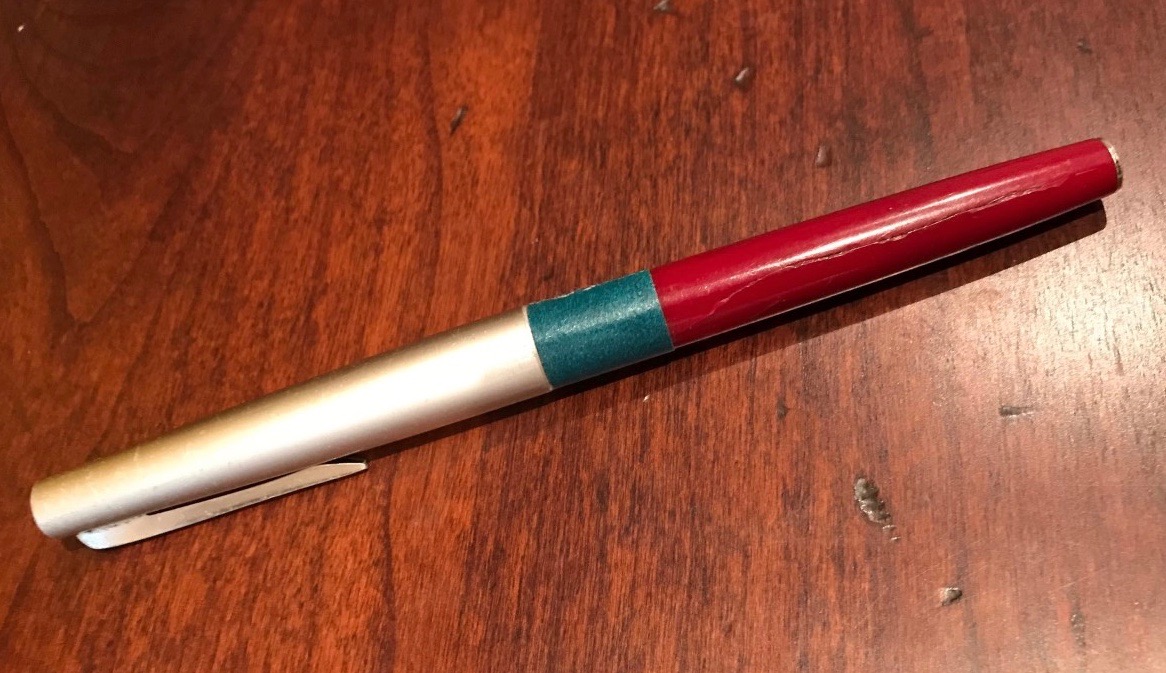
Ex. 6: この万年筆は父のプレゼントで、とても古いです。Kono mannenhitsu wa chichi no purezento de, totemo hurui desu. (This fountain pen is a present from my father, and is very old.)
The case of Ex. 6 will be explained in the next post. Please continue to: [Link Coming Soon!]=> The Particle “de”.
Related Posts