[print-me]
和文は英文の後に続きます。/Japanese translation is below the English post.
This is a continuation of: An Approach to the “X wa A ga B” Sentence Pattern.

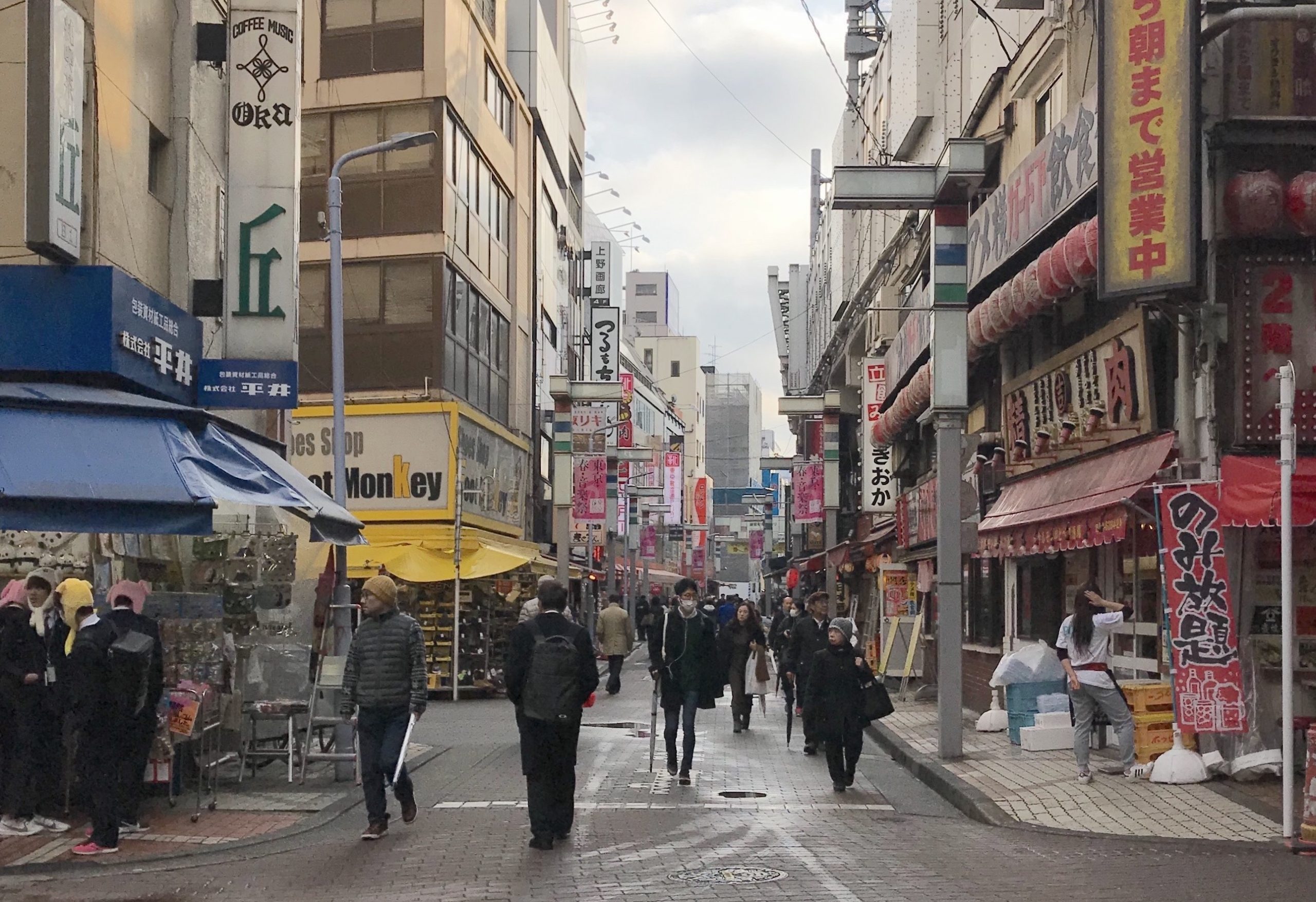
人(ひと)がよく待(ま)ち合(あ)わせをする、東京(とうきょう)は新宿(しんじゅく)の紀伊国屋(きのくにや)書店(しょてん)の前(まえ)
Contents
1. Difference between “Erika wa kami ga nagai desu” and “Erika no kami ga nagai desu”
(1) Three ways to describe someone with long hair
(2) The comparisons
2. Difference between a topic and a subject
*******************************
1. Difference between “Erika wa kami ga nagai desu” and “Erika no kami ga nagai desu”
After learning the “X wa A ga B” sentence pattern, people often wonder how “Erika-san wa kami ga nagai desu” is different from “Erika-san no kami ga nagai desu”. They would like to use the latter, the simpler structure, if the two equally say Erika has a long hair.
In this post, we would like to discuss the differences.
(1) Three ways to describe someone with a long hair
Suppose a friend of yours needs to meet a person named Erika, in front of a bookstore. You know her but your friend doesn’t, so you must explain how she looks. She has long hair, for one thing, so you will use that information.
For this, you may think of one of the following sentences:
Ex. 1: Erika-san wa kami ga nagai desu. (As for Erika, the hair is long. => Erika has a long hair.)
Ex. 2: Erika-san no kami wa nagai desu. (Erika’s hair is long.)
Ex. 3: Erika-san no kami ga nagai desu. (Erika’s hair is long.)
We will compare them in the following.
(2) The comparisons
First of all, Ex. 1 is the straightforward case of the “X wa A ga B” sentence pattern. Here, we confirm we are in the stance of talking about Erika by beginning the sentence with “Erika-san wa…” In other words, we will have Erika in mind as we speak.
Then we direct a spotlight on one part of her image, in this case her hair, and say it’s long.
The advantage of this sentence pattern in this situation is we can keep turning a spotlight on her different aspects, one by one, using the same sentence pattern. For example, keeping the “Erika-san wa”, you can continue with “…se ga takai desu (tall)”, “…megane o kakete imasu (wearing glasses)”, “…kon-iro no baggu o motte-imasu (has a ma blue purse), etc.
The second example is a simpler structure. Ex. 2 begins the sentence with “Erika-san no kami wa…” Thus, we confirm our current topic is Erika’s hair, not Erika.
Therefore, it is more likely that we continue discussing her hair in the conversation that ensues. For example, “She changes her hairstyle frequently so I don’t know how she will look tomorrow but…;” “I heard recently she dyed hair purple so it may be a good mark”, and so on. If we develop the conversation like this, it will work well, too.
Finally, in Ex. 3, by saying “Erika-san no kami ga…”, we again establish her hair as the subject. However, it is slightly different from Ex. 2.
The particle “ga” in this case indicates that we are directing a pinpoint attention on her hair AND we have just changed the subject to this one. Another possibility is we have just introduced her hair as a new subject to the conversation.
Therefore, saying “Erika san no kami ga…” might slightly surprise the listener because you were discussing how to find her. However, the listener could quickly adapt to the change of your subject, expecting it will return to Erika in the end.
So, whether Ex. 3 works well or not depends on how you develop your conversation.
2. The Difference Between a Topic and a Subject
People who learn Japanese by reading English explanations sometimes wonder at the words “topic” and “subject”. The reason is In English, a “topic” and a “subject” are considered very similar, but in the Japanese grammar, it seems “topic” and “subject” indicate different matters.
In fact, it is true. In explaining the “X wa A ga B” sentence pattern,“X” may be called “topikku (topic) or wadai (topic)”, “teema (theme) or shudai (theme)”, and so on. On the other hand, “A” is called “shugo (subject).”
By the way, “wadai” is an everyday word, “teema” and “shudai” are usually used in discussing music, movies and novels, and “shugo” is only used in linguistics.
Recap: The authors of some grammar books use “topic” and “subject” with different meanings because they want to clarify the different natures between a word followed by “wa” and another followed by “ga”. Depending on the context, their functions are very close but in a structure like “X wa A ga B”, they have different functions.
In this site, we explained the “X wa A ga B” sentence pattern using an image of a painting receiving a spotlight on a part of it. It was because we wanted to offer something easier for you to get the feeling without using the words “topic” and “subject.
[End of the English post]
Related Posts
- An Approach to “X wa A ga B” Sentence Pattern
- The Particle “wa” (は)
- [Link Coming Soon] The Particle “ga” (が)
=>Return to Recent Posts/「新着記事」へ戻る
=>Return to Home/「ホーム」へ戻る
************************************
文型「XはAがB」について、よくある質問
これは、=>「AはXがY」の文型のとらえかた試論の続きです。
目 次
1. 「エリカは髪が長いです」と「エリカの髪が長いです」はどう違うか
(1) 髪の長い人について、三通りの言い方
(2) 比較
2. 「トピック」と「サブジェクト」はどう違うか
************************
1. 「エリカは髪が長いです」と「エリカの髪が長いです」はどう違うか
「XはAがB」の文型を習ったあと、「エリカさんは髪が長いです」は「エリカさんの髪が長いです」とどう違うのかなという人がいます。意味が同じなら、簡単なので後者の文型を使いたいと。
この投稿では、これらがどう違うかを考えたいと思います。
(1) 髪の長い人について、三通りの言い方
友だちが、本屋の前でエリカという人と会わなければならないとします。あなたはエリカさんを知っているけれど、友だちは知りません。ですから、あなたはエリカさんがどんな人か説明しなければなりません。エリカさんは髪が長いので、それを言おうと思います。
それには、以下のどれかの文が考えられます。
例1:エリカさんは髪が長いです。
例2:エリカさんの髪は長いです。
例3:エリカさんの髪が長いです。
これらを比べて、受ける感じの違いを以下で考えてみたいと思います。
(2) 比較
まず、例1は、「XはAがB」の文型そのままです。こうして「エリカさんは」で文を始めると、私たちはこれからエリカについて述べるという姿勢を示します。話すに当たって思い浮かべるのはエリカだということです。
このあと、エリカのイメージの一部にスポットライトを当てます。この場合は髪で、髪が長いという文になります。
この状況での例1の強みは、同じ文型を使ってエリカの他のさまざまな面に順次スポットライトを当てていけることです。例えば、「背が高いです」「眼鏡をかけています」「紺色のバッグを持っています」などなど。
次の例2はより基本的な文型です。「エリカさんの髪は」で文を始めると、エリカではなく、エリカの髪が今の話題であると確認することになります。
ですから、この後はその髪について話が続く可能性が大きい。例えば、「あのこは髪型をよく変えるから、明日どんな髪型で来るかわからないけどね、」「最近紫のカラーにしたそうだから、目印になるみたいだよ」などなど。このように会話を発展させるなら、この文もぴったりです。
最後に、例3は、「エリカさんの髪が」で文を始めており、ここでもエリカの髪が主語になります。ただ、例2とは少し違います。
「が」はこの場合、エリカの髪がピンポイントで話題になっていること、かつたった今主語をエリカの髪に変わったことを示します。またはエリカの髪が全く新しい主語として会話に入ってきたことになります。
そのため、エリカの見つけ方を話していたのに「エリカさんの髪が……」と言うと、聞き手は少し意外に思うかもしれません。でも、いずれ話がエリカさんに戻っていくだろうと考えて、主語が変わったことにすばやく対応してくれるでしょう。
したがって、例3がうまくいくかどうかは、この後どのように会話を続けるかによります。
2. 「トピック」と「サブジェクト」はどう違うか
英語の説明を読んで日本語を学ぶ人は、「トピック」と「サブジェクト」という言葉の使い分けをわかりにくく感じることがあります。英語では、「トピック」と「サブジェクト」はとてもよく似ているのに、日本語文法ではどうやら違うことを指しているようだからです。
実はその通りで、それらの本では、「XはAがB」の文型を説明するのに、Xを「トピック・話題 topic」、「テーマ・主題 theme」、Aを「主語 (サブジェクト) subject」などと呼びます。
なお、「話題」は日常会話で使う言葉、「テーマ・主題」は主に音楽や映画や文学作品について使われる言葉ですが、「主語」は言語の文法にしか使いません。
さて、文法書の著者によってはこれらの言葉を使い分けますが、これは「は」の前に来る言葉と「が」の前に来る言葉の性質の違いを明確にするためです。この二つは文脈によってはとても似ているけれど、「XはAがB」のような文型では違った役割を持っているのです。
一方、このサイトでは、絵の一部にスポットライトが当たっているイメージを用いました。「トピック」「サブジェクト」の言葉を使わずに、「XはAがB」の文型を説明しようと考えたためです。=> An Approach to the “A wa X ga Y” Sentence Pattern
[和文部終わり]
関連リンク
- 英文部末尾をご参照ください。
=>Return to 2019 Posts / 2019年投稿記事へ戻る
=>Return to Home/「ホーム」へ戻る