Table of Contents
1. In short: The particle “e” is a destination marker
2. A bit more
…….(1) The spelling
…….(2) The omission of “e”
3. Bonus: How to address someone in a letter
************************
1. In short: The particle “e” is a destination marker
The particle “e” follows a word expressing a destination or a direction and therefore the block [Noun + “e”] always comes with one of (click here for details=>) the Verbs of Going in One Direction.
Example 1: あした郵便局へ行きます。Ashita yuubinkyoku e ikimasu. (I am going to the post office tomorrow.)

Ex. 2: この小鳥は春に北へ帰ります。Kono kotori wa haru ni kita e kaerimasu. (This bird returns to the north in the spring.)
2. A bit more on the particle “e”
(1) The spelling
Note that the particle “e” is spelled in hiragana with “へ (he)”, not “え (e)”. This is the only “へ (he)” pronounced “e”; in Modern Japanese, every other “e” sound is spelled with the regular “え”.
(2) The omission of the particle “e”
In conversation, we frequently omit the particle “e”. See below for how we actually speak.
Ex. 3: 今度みんなで「前田ずし」行かない? Kondo minna de “Maeda zushi” ikanai? (Why don’t we go to the Maeda-Zushi sushi restaurant sometime soon?)
Ex. 4: この店、来たことありますか? Kono mise, kita koto arimasuka? (Have you come to this restaurant?)
The reason for the omission is that the listener can easily recognize the word as the destination, from the verb.
However, in your writing, it is generally better to keep your “e” as well as the other particles.
3. Bonus: How to address someone in a letter
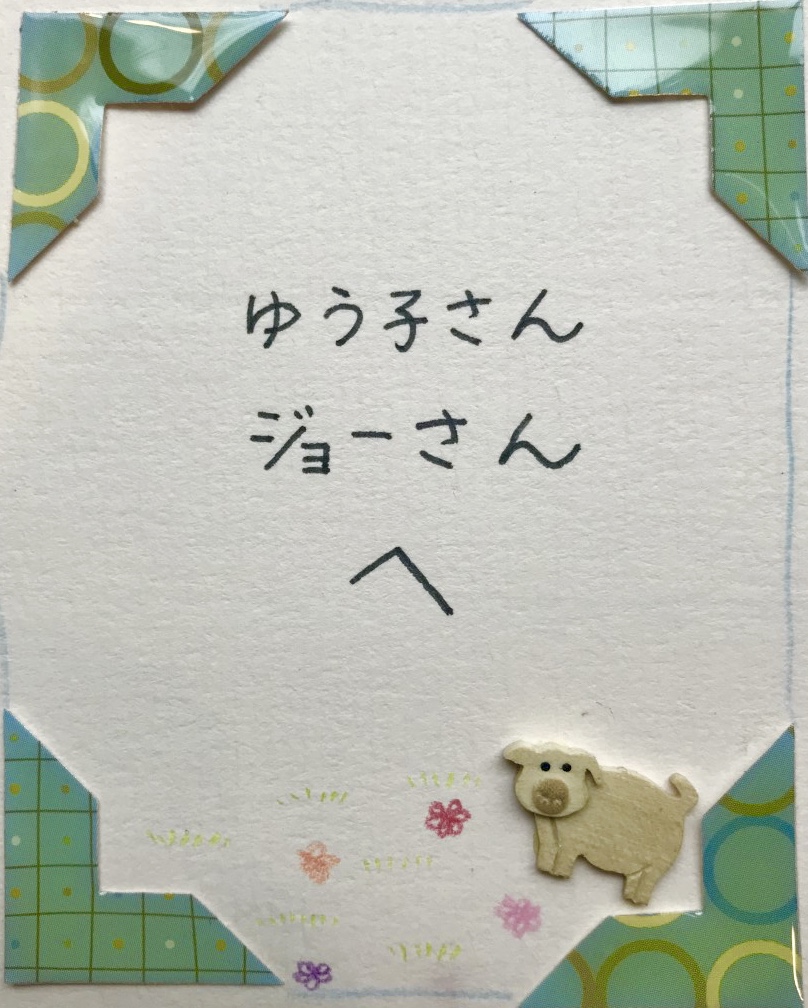
When you hand-write a personal message or a letter to someone, you can address the recipient as:
Ex. 5: ミラーさんへ Miraa-san e (To Mr./Ms. Miller)
This block [Noun + “e”] sounds not too familiar but friendly and personal. So we don’t use it in business correspondence. In business, we just say “Miraa-sama” (this is the most formal) or “Miraa-san”.
Related Posts
- [Next Post] The Particle “ni” (に)
- [Related Post, coming soon] The Particle “yori” (より)
- Particles and Their Related Verbs
- [Previous Post] The Particle “no” (の)