ルビつき和訳は英文の後にあります。/ The Japanese translation with Ruby is below the English post.
THE FIRST DREAM OF THE YEAR
Contents

1. Three motifs on the towel
2. Why is it good to see these as the first dream of the year?
3. Another meaning of “nasu (eggplant)”
4. Do this when you saw a bad dream
1. Three motifs on the towel
We are thinking of sending a towel from Japan to an American friend who has interest in Japan.
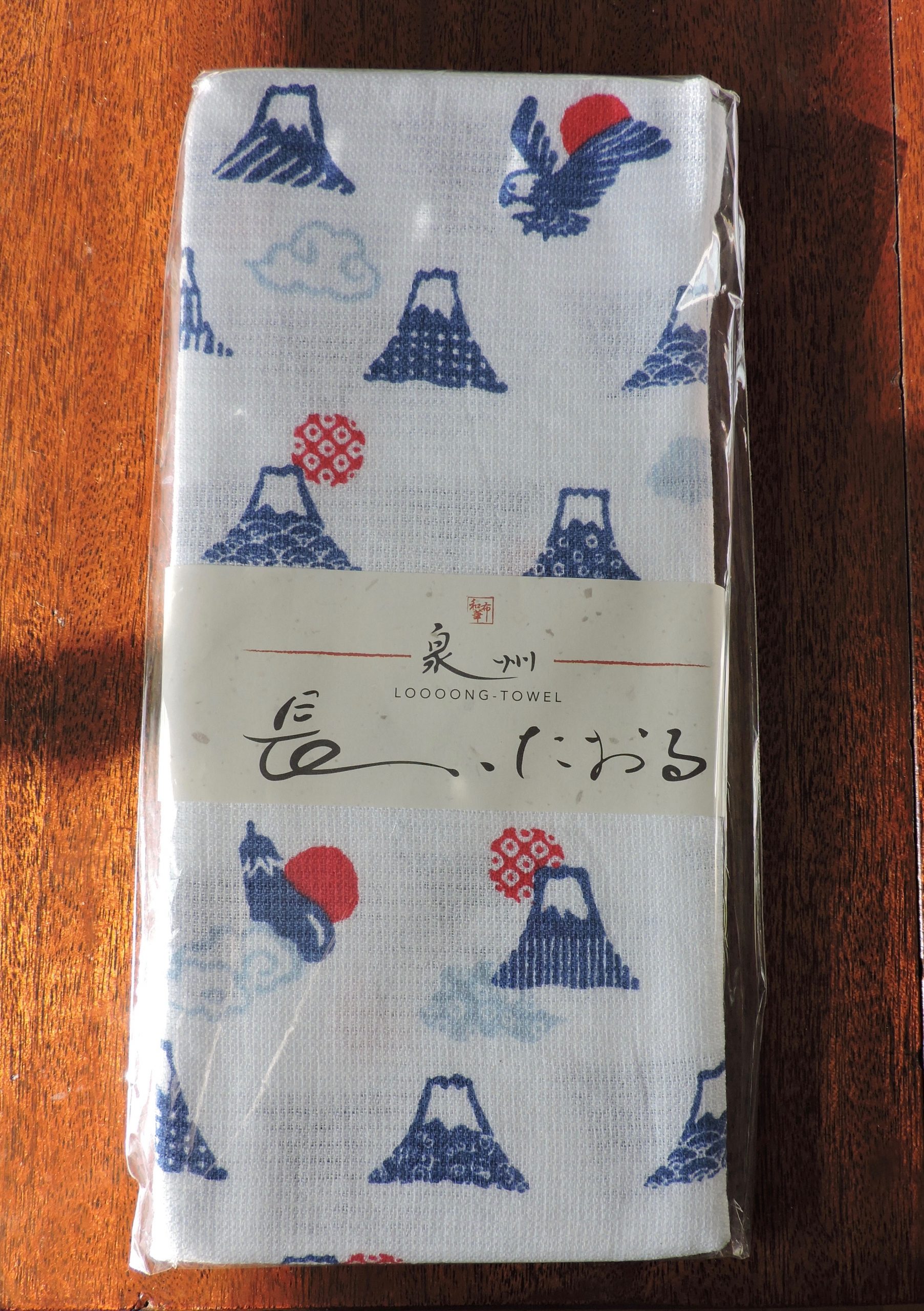
Using this small gift, we can also tell a thing or two about Japan, to him and to you who are reading this post.
Do you know the message we want to send?
The motifs on the towel are three; Mount Fuji, a hawk, and an eggplant.
There is a saying: “Ichi Fuji, ni taka, san nasubi (No. 1 Fuji, No. 2 hawk and No. 3 eggplant)” with a rhythm like a part of a haiku. Seven moras (i-chi-fu-ji-ni-ta-ka) and five moras (sa-n-na-su-bi), right?
You have good luck during the year if you see one of these three things in your dream while you sleep on the new year’s first night.
Actually, we don’t know exactly when the “first night of the year” is. Some say the night of December 31st, others January 1st, still others January 2nd. It doesn’t matter whether you use the Gregorian calendar or the lunar calendar, but of course originally they used the lunar one.
Anyway, the dream is called hatsu-yume or the first dream of the year.
So the meaning of the present is “Wish you see a good hatsuyume, and have good luck for next year!”
2. Why is it good to see these as the first dream of the year?
There are a few theories on the origin of these strange items for hatsuyume.
Because it’s said this saying has been around since early Edo Era, it seems natural to believe it has something to do with Tokugawa Ieyasu (1543-1616), the first Shogun from the Tokugawa family.
Arguably a man known to be one of the luckiest in Japanese history, Ieyasu was born only the son of a small-scale daimyo in Suruga (today’s Shizuoka Prefecture).
After persevering many years of hardship, he gradually gained power and influence, eventually overpowered all other daimyo‘s and established the Tokugawa Shogunate.
Thus he ended the era of countless wars and armed conflicts. After his time, until 1867, Japan was governed by Shoguns from the Tokugawa family, and this period is called the Edo Era (1603-1867).
Returning to the three lucky items in dreaming: Mt. Fuji, the highest mountain and a symbol of Japan, is partially located in Suruga, Ieyasu’s homeland; Ieyasu loved falconry in the fields of Suruga; and he liked to eat early eggplants. It may have been commoner’s wishes to have a little luck like Ieyasu.
3. Another meaning of “Nasu (eggplant)”
By the way, “nasu” is the word for the eggplant. Apart from the first dream of the year, an eggplant is a sign of good luck since the word is a homonym of the verb “nasu (usually spelled 成す)”, meaning “to accomplish/achieve [a project/a dream]”.
4. Do this when you saw a bad dream
If you do have a very bad dream, first of the year or not, you need not worry.
Just say:
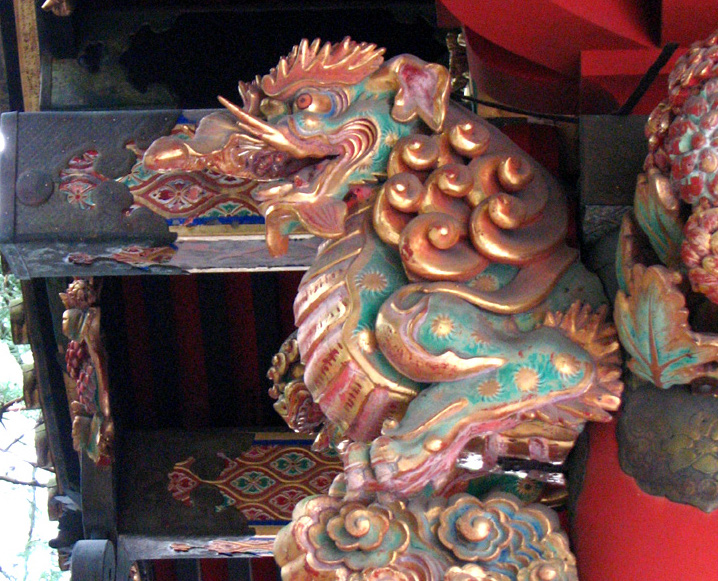
“Baku-san, kono yume o agemasu! (Baku, I will give you this dream!)”
“Baku” is a word for the actual animal called tapir, but it’s also the name of an imaginary Chinese animal.
According to the legend, the baku has the body of a bear, the trunk of an elephant, eyes of a rhinoceros, the tail of a cow and legs of a tiger, and it eats nightmares. It shoos away epidemics, disasters, and evil spirits.
So the baku will be glad to take care of your bad dreams.
Since it appears only in the peaceful time, the baku is considered a lucky animal. Also because of that, it is often carved on kibana, the wooden nosings at the ends of penetrating tie beams in temples and shrines.
Now you are all ready.
We wish you very happy another year!
[End of the English post]
初夢

目次 1. 三つのモチーフ 2. なぜこれらが吉夢なのか? 3. ナスのもう一つの意味 4. 悪い夢を見ても大丈夫
1.三つのモチーフ
写真のタオルを、日本に興味のあるアメリカ人の友人に送りたいと思います。
この小さなプレゼントを使って、生徒さんと、それからこれを読んでいる皆さんに、日本について一つ二つお話ができます。
私たちが伝えたいメッセージ、わかりますか?
タオルの図案は三つあります。富士山、鷹、ナス。
俳句のようなリズムで、「一富士、二鷹、三茄子」といいます。モーラが七つ (い、ち、ふ、じ、に、た、か) と五つ (さ、ん、な、す、び) ですね?
この三つのどれかを、新年の最初の夜に夢に見ると縁起がいいのです。
さて、新年の最初の夜がいつであるかについては、12月31日の夜、1月1日の夜、1月2日の夜など諸説あります。新暦でも、旧暦でも構いませんが、初めはもちろん旧暦でした。
ともかく、その夢を初夢といいます。
そこで、このタオルの意味は「良い初夢が見られますように、来年、良いことがありますように!」ということです。
2.なぜこれらが吉夢なのか?
「一富士、二鷹、三茄子」という奇妙な組み合わせの起源は諸説ありますが、この言い伝えは江戸時代始め頃からあったらしいので、一般には徳川家から出た最初の将軍、徳川家康に関わることを夢に見たい、そうすればその幸運にあやかれるかもしれないということだろうと考えられています。
日本史でもっとも幸運な人物の一人ともいわれる家康は、駿河 (現在の静岡県) の小さな大名の息子として生まれました。
長年の苦労の後、少しずつ兵力を蓄えて影響力を強め、最終的に他の大名を圧倒して17世紀の初めに徳川将軍家を立てました。
これにより、いくさがたくさんあった時代がひとまず終わったのです。この後1867年までは常に徳川家から将軍が立てられましたが、この期間を江戸時代といいます。
富士山は、日本で一番高い山で、日本のシンボルでもありますが、家康の故郷である駿河にまたがっています。家康は駿河の草原での鷹狩を好みました。また、早生のナスが好物だったといいます。
3. 「ナス」のもう一つの意味
なお、「ナス」は「成す」の同音異義語であるため、初夢とは関係なく、幸運の印にもなります。
4. 悪い夢を見ても大丈夫
ところで、悪い夢を見たら、心配はいりません。初夢であっても普通の時でも
「バクさん、この夢をあげます」
と言えばいいのです。
バクは実在する動物の名でもありますが、中国から来た架空の動物の名でもあります。
伝説によればバクの体は熊で、象の鼻、犀の目、牛の尾、虎の脚を持ち、凶夢を喰らいます。疫病や厄を避け、邪気を払ってくれます。
ですから、バクに頼めば、あなたの悪い夢も喜んで食べてくれます。
平和な世にしか現われないので、縁起のよい霊獣として寺社の木鼻などに数多く彫刻されています。
さあ、これで準備万端です。
来年、良いことがたくさんありますように!
[和文部終わり]