[print-me]
ふりがなつき和文はこのページの下の方にあります。/ The Japanese translation with furigana is at the bottom of this page.
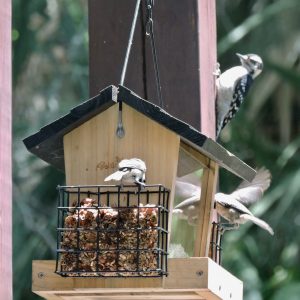
You first learn “yoku” as a word for“often”.
However, you may notice later that it has several other definitions in English.
In this post, we will organize the meanings of “yoku”.
Table of Contents
- “Yoku” has different meanings according to the verb it comes with
- “Often” when you use it with verbs expressing transportation or Verbs Expressing Lasting Actions (Please refer to “Two Aspects of Verbs” for details about Verbs Expressing Lasting Actions)
- “Hard” when you used it with specific verbs such as “study”
- “Clearly” when you use it with verbs to show some states such as “know”
- It also means “a lot” when you use it with verbs expressing lasting activities
- When does “yoku” mean “often” and when “a lot”?
- An idiom “yoku dekimashita!”
- Summary
- Reference (at the bottom of this page)
*********************************
1. “Yoku” has different meanings according to the verb it comes with
A. It means “often” when you use it with verbs expressing transportation or Verbs Expressing Lasting Activities (Please refer to “Two Aspects of Verbs” for details about Verbs Expressing Lasting Activities)
“Yoku” frequently means “often” with one of Verbs of Transportation or Verbs of Expressing Lasting Actions. See Examples:
Ex. 1) Kono-goro kotori ga yoku esa-bako ni kimasu. (Recently, little wild birds often visit our feeder.)
Ex. 2) Kodomo no koro, oya no shigoto no tameni, yoku hikkoshi-shimashita. (When I was a child, we often moved because of our parents’ job.)
Ex. 3) Yoku koko de pan o kaimasu. (I often buy bread here.)
Ex. 4) Yoku tomodachi to geemu o shimasu. (I often play games with my friends.)
B. “Hard” when you used it with specific verbs such as “study”
With verbs meaning “study”, “work”, “practice” or “make efforts” for a purpose, “yoku” means “hard” or “seriously” and “spending a lot of time and energy”.
Ex. 5) Miraa-san wa yoku benkyoo shimasu ne. (Mr. Miller studies hard, doesn’t he? / Mr. Miller, you are a good student, aren’t you?)
Ex. 6) Yoku renshuu-shimashita kara honban de agarimasen-deshita. (I practiced so hard that at the actual presentation I didn’t become nervous.)
Ex. 7) Yoku ganbatta ne! (You worked hard and as a result did an excellent job!)
C. “Clearly” when you use it with verbs to express cognition such as “know”

With verbs expressing cognition or a state in intellectual activities such as “know”, “understand”, and “keep in my memory”, etc., it means “well” or “clearly”.
Ex. 8) Nyuu Yooku no Kuraisuraa biru desu ka? Yoku oboete imasu yo! (You mean Chrysler Building in New York? I remember it well!)
Ex. 9) Watashi wa Supein-go ga yoku wakarimasu. (I understand Spanish well.)
Ex. 10) Watashi ga nomisugirutte kanai ga itte imashita ka? Yoku wakatte imasu. Demo, yamerarenai-n-desu. (Did my wife tell you I drink too much? I know well. But I just can’t stop.)
D. It also means “a lot” when you use it with Verbs Expressing Lasting Activities
“Yoku” can also mean “do something to a great degree” or “do something a lot or more thoroughly (than otherwise)” when it comes with a Verb Expressing Lasting Action. See the following examples:
Ex. 11) Koara wa yoku nemasu. (Koalas sleep a lot)
Ex. 12) Yoku kande tabenasai. (“Chew well!” To children when they eat too quickly.)
Ex. 13) Yoku kangaete, henji o kudasai. (Take time and think carefully before you reply to me.)
Ex. 14) [A sign above a basin] Yoku te o araimashoo. (Wash your hands thoroughly.)
Ex. 15) Buta-niku ni yoku hi o tooshimasu. (Cook pork thoroughly.)
Ex. 16) [At a test site, you are given a book of questions. On the first page, it reads:] Mondai-bun o yoku yonde kudasai. (Read the question sentences carefully.)
Ex. 17) Kyoo wa kodomo ga yoku yuu koto o kiite kuremasu. (Today, fortunately, my kid listens to me and follows my instruction without whining or arguing.)
2. How can we tell when “yoku” means “often” and when “a lot”?
As seen in Paragraphs 1-1 and 1-4, “yoku” means “often” or “to a great degree, a lot” with Verbs Expressing Lasting Actions. How do we know which meaning does “yoku” have in a particular sentence?
First, guess from the context.
If it’s not clear, it should be an idiom or a set phrase.
Let’s look at Examples 11-17 again:
Ex. 11: Since sleeping is a very common activity, “often” doesn’t sound right here. Therefore, we can tell it means sleeping for a long time.
Ex. 12: “Yoku kamimasu” is an idiom meaning “chew well” or “chew many times”.
Ex. 13: “Yoku kangaemasu” means “think carefully” or “be mindful in taking an action”.
Ex. 14: With the verb form “-mashoo”, you can tell it’s a polite warning or prompting for people or children who have come to the basin. So you can guess it signifies an action which happens on the spot; wash hands thoroughly.
Ex. 15: “Yoku hi o tooshimasu” means “cook so that there is no part left undercooked”.
Ex. 16: An examinee would interpret it as “Read carefully, paying attention to details”.
Ex. 17: “Yuu koto o kikimasu” is and idiom and means “be docile and follow an instruction or obey an order of someone who is supposed to have an authority on them”. In connection to this, “yoku” means “obediently” here.
3. An idiom: “yoku dekimasu”
Lastly, we would like to mention a popular idiom “yoku dekimasu”. It means “to excel” in a subject of study, a special skill such as the computer or a foreign language. See examples:
Ex. 18 Miraa-san wa Kankoku-go mo yoku dekimasu. (Mr. Miller speaks Korean very well, too.)
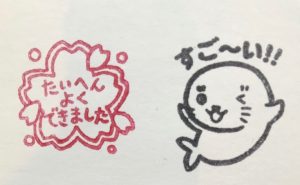
Ex. 19 Taihen yoku dekimashita! (“Your work was brilliant!” said by a teacher to a student)
Below is the stamp I use on people’s homework.
5. Summary
“Yoku” has different meanings in English depending on the verbs you use it with.
- With verbs of transportation (such as “going”), it means “often”
- With Verbs Expressing Lasting Activities (such as “tabemasu”), it means “often” or “to a great degree, a lot” depending on the context
- With several special verbs such as “study”, it means “hard”
- With several stative expressions such as “know”, it means “clearly”
Thank you for reading!
[End of the English text]
1. “Yoku”/「よく」の意味
「よく」という言葉は初め、「たびたび」「しばしば」などの意味で習います。
でも、後で、英語では他の意味になることに気づく方もあるでしょう。
この投稿では、そんな「よく」の意味を整理したいと思います。
目 次
I. 動詞によって違う「よく」の意味
- 「移動」や「持続する活動」を表す動詞とともに使われるとき「たびたび」(「持続する活動の動詞」については、ここをクリックして、「動詞の二つの相」をご参照ください。)
- 「勉強します」などの動詞とともに使われるとき「いっしょけんめい」
- 「知っています」などの状態を表す動詞とともに使われるとき「はっきりと」
- 「持続する活動の動詞」とともに使われるとき「はなはだしく」の意味も
II. どんな時「よく」は「たびたび」の意味になり、どんな時「はなはだしく」になるか?
III. 熟語「よくできました!」
IV.まとめ
**************************
1. 動詞によって違う「よく」の意味
A.「移動」や「持続する活動」を表す動詞とともに使われるとき「たびたび」
「よく」は、「移動を表す動詞」「持続する活動を表す動詞」とともに使われるとき「たびたび」という意味になることが多い。
例1) このごろ小鳥がよく餌箱に来ます。
例2) 子どもの頃、親の仕事のために、よく引っ越ししました。
例3) よくここでパンを買います。
例4) よく友達とゲームをします。
B.「勉強します」などの動詞とともに使われるとき「一所懸命」
何かの目的のために「働く」、「勉強する」、「練習する」、「努力する」などの特別な動詞と一緒に使われるとき、「よく」は「一所懸命(真剣に、多くの時間とエネルギーを費やして)」という意味になります。
例5) ミラーさんはよく勉強しますね。
例6) よく練習しましたから本番であがりませんでした。
例7) よくがんばったね!
C.「知っています」など認識を表す動詞とともに使われるとき「はっきりと」
「知っています」「わかっています」「覚えています」「思い出せません」など、認識または知的な精神活動の状態を表す動詞とともに使う時、「よく」は、「はっきりと」「ふかく」などの意味になります。
例8) ニューヨークのクライスラービルですか?よく覚えていますよ!
例9) 私はスペイン語がよくわかります。
例10) 私が飲みすぎるって家内が言っていましたか? よくわかっています。でも、やめられないんです。
D.「持続する活動の動詞」とともに使われるとき「はなはだしく」の意味も
「持続する活動の動詞」と一緒に使われるとき「よく」は、「多量・大量に」「はなはだしく(大きな度合いで[手洗い場の張り紙)」の意味になることがあります。
例11) コアラはよく寝ます。
例12) よく噛んで食べなさい。(子供の食べ方が早すぎるとき)
例13) よく考えて、返事をください。
例14) [手洗い場の張り紙] よく手を洗いましょう。
例15) 豚肉によく火を通します。
例16) [試験会場で配られた問題冊子の最初のページに] 問題文をよく読んでください。
例17) 今日は子供がよく言うことを聞いてくれます。
2. どんな時「よく」は「たびたび」の意味になり、どんな時「はなはだしく」になるか
I-1節とI-4節で、「よく」が「持続する活動の動詞」と一緒に使われると「たびたび」または「はなはだしく」のどちらかの意味になると述べました。どちらの意味か、どうすればわかるのでしょうか。
まず、文脈で判断します。
わかりにくい時は、熟語や決まった言い方になっているわけです。
例11~17をもう一度見てみましょう。
例11) 眠ることは日常的な活動なので、「たびたび」では意味がよくわかりません。そこで、「長い時間」眠るという意味だろうと考えます。
例12) 「よく噛みます」は、「何回もしっかり噛む」という意味の熟語です。
例13)「よく考えます」は、「注意深く考える」「意識しながらある動作をする」という意味の熟語です。
例14) 動詞の形が「ましょう」なので、これは洗面所に来た人々や子供たちへ、この場で行う「ていねいに洗う」ことに注意を促していると考えます。
例15) 「よく火を通します」は「生な部分が残らないように十分に加熱する」という意味です。
例16) 受験者がこれを読めば、「細かいところまで注意して読みなさい」と理解します。
例17) 「言う事を聞きます」は熟語で、「権威があるとされる人の指示や命令に黙って従う」ということです。ここでは、「よく」は「おとなしく」という意味になります。
3. 熟語「よくできました!」
最後に、「よくできます」という熟語があります。学習科目、コンピューターなどの特別な技能、外国語などにおいて優秀であるという意味です。
例18) ミラーさんは韓国語もよくできます。
例19) たいへんよくできました!
私たちは時々、下のようなスタンプを宿題に捺しています。
4.まとめ
「よく」は、ともに使う動詞によって、英語では違った言葉で理解されます。
- 移動を表す動詞 (「行きます」など)と一緒に使うと:「しばしば」
- 持続する活動を表す動詞 (「食べます」など):文脈によって「しばしば」または「はなはだしく」
- 「勉強します」などの特定の動詞:「多くの時間とエネルギーを費やして、真剣に」
- 「知っています」など特定の状態を表す表現:「はっきりと」
お読みいただき、ありがとうございました。
Reference / 参考サイト
=>Return to 2019 Posts / 2019年投稿記事へ戻る
=>Return to Home/「ホーム」へ戻る