和訳は英文の下にあります。/ The Japanese translation with ruby is on the bottom of this page. The Ruby is under construction.
Still Delicious!
Contents

1. A newspaper clipping
2. As he keeps eating, the child keeps commenting "still delicious!"
3. When should we stop eating?
1. A newspaper clipping
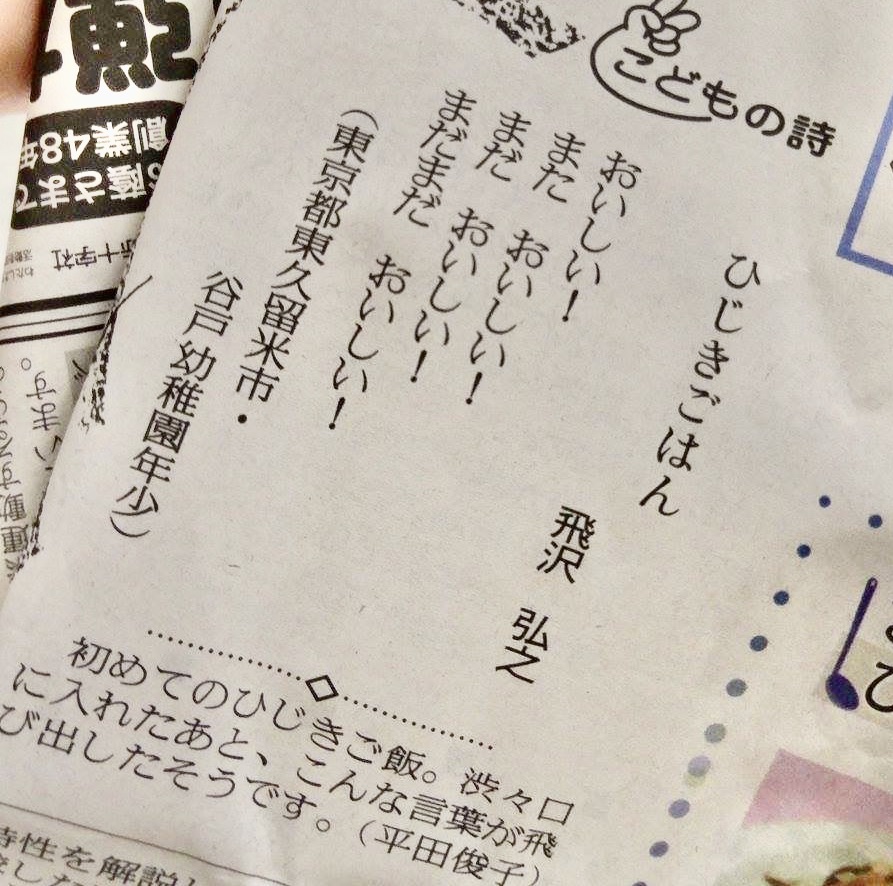
Oishii!
Mata oishii!
Mada oishii!
Mada mada oishii!
Words of a three-years old
We found a small newspaper clipping. The mother wrote a letter to a newspaper because she was very happy when her three-year-old first ate her rice mixed with hijiki (short, pencil lead like black seaweed) and loved it.
From the brief comment added to the child’s words, we imagine the situation as follows:
2. As he keeps eating, the child keeps commenting “Still delicious!”
A three-year old boy reluctantly had hijiki rice for the first time in his life. Hijiki rice is a popular dish but the look of black streaked white rice is not very enticing. After the first mouthful, he rounded his eyes and reported his discovery:
> Oishii! (Delicious!)
He had another mouthful. He exclaimed,
> Mata oishii! (Delicious again!)
He had another and said incredulously,
> Mada oishii! (It’s still delicious!)
He continued eating, saying to himself,
> Mada mada oishii! (The good taste is still coming more and more!)
3. When should we stop eating?
Although he is so moved by the wonderful experience, we are almost sure that he will stop eating when he feels full. We hear that young children stop eating naturally at the right point of time.
So that we can do the same, we would like to remember the fresh sensation of tasting something good like this.
When we are aware that we feel no more of the excitement, we should just stop eating. (At least I should.)
We (or at least I) often keep eating because as we eat, we pass the point of time at which we have gotten satiated. After that point, it will be just our brain who falsely feels happy, but our body system no longer needs it or feels joy. It just receives a greater burden to digest.
[End of the English post]
まだまだ美味しい
目次
- 新聞の切り抜きから
- 食べ続けながら、信じられないように「まだ美味しい!」
- いつ食べやめる?
********************************************************************************************
1. 新聞の切り抜きから
おいしい!
またおいしい!
まだおいしい!
まだまだおいしい!
三歳児の言葉
これはある母親が新聞に投稿した子どもの言葉です。三歳の子どもがひじきご飯を初めて食べて、こう言って喜んだので、とてもうれしかったのだそうです。
子どもの言葉に添えられた短いコメントから、私たちは状況をこんなふうに想像しました。
2. 食べ続けながら、信じられないように「まだ美味しい!」
三歳の男の子が、初めてのひじきご飯をいやいや口にしました。ひじきご飯を好きな人は多いけれど、黒い筋の入ったご飯はあまり見た目がよくない。一口食べて、子どもは目を丸くして発見を伝えます。
> おいしい!
子どもはもう一口食べて、
> またおいしい!
と大きな声を出します。そして、次の一口で、信じられないといった調子で
> まだおいしい!
それからあとは、食べ続けながら、独り言です。
> まだまだおいしい!
3. いつ食べやめる?
この子は素晴らしい体験にすっかり感動していますが、たぶん、お腹がいっぱいになったら食べるのをやめるでしょう。子どもたちがとても小さい時は、自然に適当なところで食べやめるものだと聞きます。
私たちも、同じことができるように、この新鮮な感覚を覚えていたいものです。
そして、感動しなくなったら、食べるのをやめるべきなんです (少なくとも私は)。
私たち (少なくとも私) は、往々にして満足した時点でそれに気づかず食べ続けます。その時点の後は、ただ頭の中でおいしいと思い込んでいるだけ。体ではもう必要ないので、喜びを感じません。ただ、消化の負担が増えるだけ。
[和文部終わり]