THE PARTICLE “O” (を)
CONTENTS

1. In short: The particle “o” (を) has three main functions
      (1) “o” can show the object of the verb
      (2) “o” can mean “in” a big space
      (3) “o” can mean “out of” a place
2. A bit more on the particle “o” (を): The Spelling
3. Bonus
      (1) The pronunciation of the particle “o”
      (2) The omission of the particle “o”
1. In short: The particle “o” (を) has three main functions
(1) “o” can show the object of the verb
The particle “o” can follow the object of the verb.
Example 1: Kesa, pan to tamago o tabemashita. けさ、パンとたまごを食べました。(I ate some bread and eggs this morning.)
A verb requiring an object is called a transitive verb. Here are some of many verbs usually used as transitive verbs in Japanese:
- tabemasu (to eat) 食べます
- yomimasu (to read) 読みます
- renshuu-shimasu (to practice or train) 練習します
- motte-kimasu (to bring something) 持ってきます
- keshimasu (to turn off or delete) 消します
- oshiemasu (to teach, tell) 教えます, etc.
“Usually” means that most of the time, we hear the object with these verbs. So, if the object does not precede a transitive verb, we feel something is missing from the sentence.
Here is an example. What do you think about the following sentence?
Ex. 2: Kinoo neru mae ni chotto yomimashita. きのう寝る前にちょっと読みました。(Yesterday before going to bed I read a little.)
The English translation looks fine. In Japanese, however, it may make us feel something is missing and want to ask “Nani o? 何を? ([Read] what?)” even if it is not particularly important in the conversation. Therefore, actually, we usually say it like this:
Ex. 3: Kinoo neru mae ni chotto hon o yomimashita. きのう寝る前にちょっと本を読みました。(Yesterday before going to bed I read a book for a while.)
(2) “o” can mean “in” a big space
The particle “o” can follow a word expressing big space, and mean something moves “in” the space. See the examples:
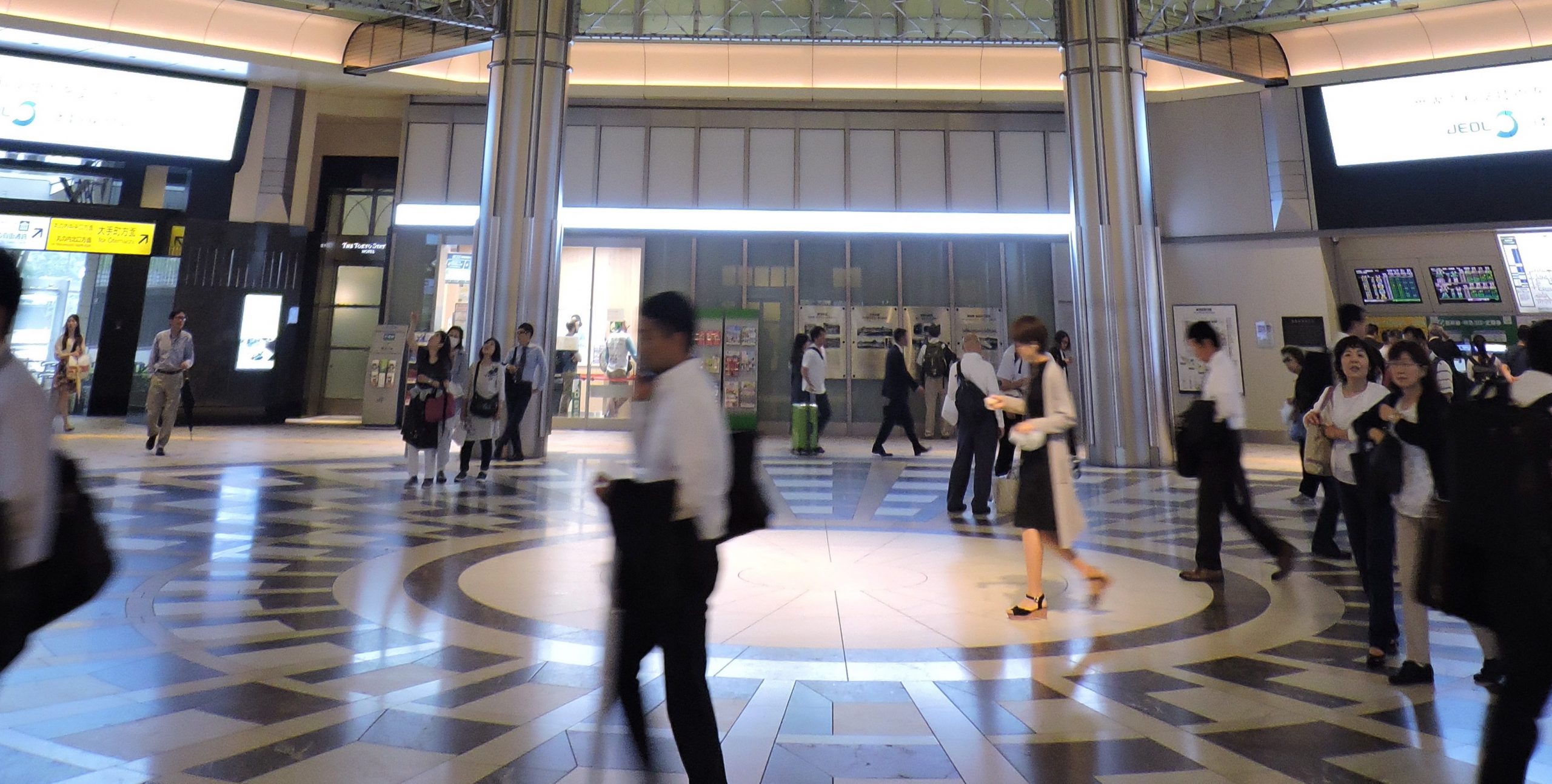
Ex. 4: Tori ga sora o tonde-imasu. 鳥が空を飛んでいます。(A bird is flying in the sky.)
Ex. 5: Kujira ga nanpyooyoo o oyoide-imasu. 鯨が南氷洋を泳いでいます。(Whales are swimming in the Antarctic Ocean.)
For this meaning, the [noun expressing space + “o”] block is followed by => a Verb of Moving About.
Also, this grammar expresses an unrestricted movement, such as birds flying in the sky, cars and people passing on the street, you strolling in a park freely or a whale swimming in a vast body of water.
On the other hand, if you go to a beach, your swimming will take place in a very small, restricted area. So, for ourselves, we say as follows:
Ex. 6: Odawara no umi de yoku oyogimashita. 小田原の海でよく泳ぎました。(I used to swim in the ocean in Odawara City.)
(3) “o” can mean “out of” a place
The particle “o” can follow a word expressing a place, and mean “out of” the place.
Ex. 7: Go-ji han ni kaisha o demasu. 5時半に会社を出ます。(I will leave work at half past five.)
Ex. 8: Miraa-san wa ni-sen nen ni kookoo o demashita.ミラーさんは2000年に高校を出ました。(Mr. Miller graduated from high school in Year 2000.)
For this meaning, the [noun expressing a place + “o”] block is followed by => a Verb of Leaving a Place.
2. A bit more on the particle “o” (を): The spelling
Note that we spell the particle “o (wo)” with “を”. Do not write “お”, that’s the rule. In Modern Japanese, we use “を” only for this particle.
3. Bonus
(1) The pronunciation of the particle “o”
“o” (を) is pronounced the same as “o” (お).
However, there are still many people including the youth (if not a majority) who pronounce it “wo”, the old way.
You can say it either way.
(2) The omission of the object marker “o”
In conversation, we frequently omit the particle “o”. See below for how we actually speak:
Ex. 9: Asa-gohan, tabemashita? 朝ごはん、食べました? (Did you have breakfast?)
Ex. 10: Maria-san ni meeru (o) shita? マリアさんにメールした? (Did you send an e-mail message to Ms. Maria?)
Ex. 11: Shuumatsu ni shukudai (o) shimasu.週末に宿題します。
The reason for the omission is that the listener can easily recognize the object, in these cases “breakfast” or the “message” as the object from the verb and the context.
However, it is generally recommended to keep your “o” and all other particles in your writing.
Related Posts
- [Link coming soon!] The Particle “kara” (から)
- Particles and Their Related Verbs
- [Previous Post] The Particle “de” (で)